This essay is dedicated to the late John P. O’Neill, and to Warren, Ali, Mark and Richard, whose story has held my heart for over a decade. I wrote it for you, and for my ancestor Josiah Bartlett, a signer of the Declaration of Independence. The title is inspired by Heather Cox Richardson’s indispensable “Letters from an American,” vital to our understanding of how history informs the present.

PART I: PUBLIC TRUST
Seldom noted in headlines these days, September 11 played a significant role in our current constitutional crisis.
Much of my generation was reeling in dismay in the years following September 11, 2001. The Iraq and Afghanistan wars were grinding on. The “war on terror” policies, including the mass surveillance of Americans, Guantanamo Bay Prison, “Enhanced Interrogation,” and military commissions were shown to have driven increased terrorist recruitment, compromised our rule of law, and damaged U.S. leadership in the world.
We expected a robust pursuit of al-Qaeda for its heinous crimes, but the more extreme policies, conceived and implemented in secret, evidenced a George W. Bush administration that was tempted to view the law not as a foundation upon which to stand strong but as an obstacle to circumvent. It bypassed both Congressional and public oversight, as observed by veteran journalist and author, Jane Mayer.
The Congress did manage in later years to enact limited reforms like the USA Freedom Act, but much of the sweeping legislation of the “war on terror” has largely remained in place, leading to military operations expanding into many countries (22 or more, the exact number being classified.)
While the most glaring of the extremes have been put “on the shelf,” the policies embodying them were actualized and endure as retrievable in response to another national emergency by a future administration, whether motivated by ignorance or malice. In other words…
…no one knows how secure the reforms achieved will remain.
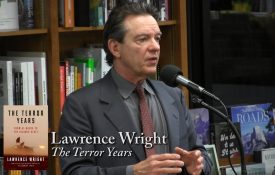
When I met my friend and former FBI agent, Warren Flagg, it quickly became clear how close he was to the late FBI counter-terrorism legend, John P. O’Neill. O’Neill had been the subject of an indelible article I’d read in the New Yorker in early 2002, written by Lawrence Wright, a master of elegant prose who traveled the world assembling the connective realities leading to September 11. It was a notable coincidence, since that article about John, who’d died in the attacks, had an emotional impact on me and doubtless many others.
Warren urged transparency about the lead-up to 9/11.
Recently freed from under nondisclosure agreements, colleagues of Warren who had worked in counter-terrorism in the lead-up to 9/11 were now speaking out, publicly. He introduced me to their work, taking me to panel discussions, inviting me into a closer view. My 34-minute film, UNCHECKED, a citizen’s perspective, was inspired by the encounters with their revelations about the tragic withholding by the CIA of vital intelligence from the FBI.
How did al-Qaeda evade the most sophisticated intelligence system in the world?
The literal answer to that question is, frankly, it didn’t.
First, in regard to each agency’s primary mandate, the CIA gathers foreign intelligence. It acts as the “bird watcher.” The FBI solves and prosecutes crimes on the basis of probable cause. It acts as the “bird catcher.”
In late 2000, John O’Neill and his I-49 team of FBI agents in Yemen had identified the al-Qaeda mastermind who led the October suicide bombing of the USS Cole ship in the Port of Aden. In tracking him assiduously, the team made, repeatedly, official and specific inquiries to the CIA, asking for certain pieces of information missing from the puzzle it was assembling to target his latest whereabouts. The CIA, as later established, did possess the requested information but deliberately withheld it, repeatedly, for twenty months prior to 9/11, keeping it from the FBI in a “close hold.”
Richard A. Clarke, then National Coordinator for Counter-Terrorism, has stated his belief publicly that if the CIA had delivered those details, the FBI would have prevented altogether, or at least in part, the catastrophe from happening. None of the other “near misses” in uncovering of the 9/11 plot involved disrupting an active criminal investigation of specific al-Qaeda members, notably by the FBI, the lead agency for investigating and preventing terrorism in the United States. Not only tragic, the FBI’s “near miss” was extraordinary.
Why did the CIA withhold critical information from the FBI that it was lawfully required to share?
That question, never fully investigated, was never answered. Instead, its significance was folded into a general narrative citing “rivalry” among intelligence agencies and “failure of imagination” as the ultimate causes of our national unpreparedness in face of the 9/11 attacks. One of the remarkable details withheld from the FBI, concerning a hijacker’s multiple entry visa to the U.S., can be found in the 9/11 Commission Report in small print on page 502, footnote 44. In essence, the FBI’s tragedy was buried under vagueness, and for many Americans, the vagueness persists to this day…
…in disregard for the critical role of a fully informed public.
Vagueness can mask deeper realities. Many Americans remain unaware of the FBI’s ordeal in the lead-up to 9/11, and still don’t know that the Bureau’s agents and others across law enforcement flatly rejected the CIA’s Enhanced Interrogation Program, knowing torture cannot produce reliable information from detainees, not otherwise obtainable using traditional time-tested techniques. They chose to adhere to the law, untainted, recognizing no need to relearn the lessons of history.
Most astonishing was to learn how well, in fact, our security system had worked in the lead-up to September 11.
Contrary to the narrative that existing security methods were unequal to the task of shielding us from terrorists, the revelations of Warren’s colleagues gave evidence, if you will, that our security system, however imperfect, was in good hands in the lead-up to 9/11, and working well. Something was awry in the more shaded corridors at the top of government. As a result, a doorway to repressive policies was pried open. Warren had opened for me another kind of doorway, a hopeful one, pointing to other government voices, worthy of trust. It was restorative.
While restorative, that doorway also brought new questions to light:
Had we known shortly after the attacks how close our existing security system had come to disrupting the 9/11 plot, would our justifiable fear have moderated? Would our resistance to the Iraq invasion, extreme policies and constitutional violations been more defiant; our immunity to mis- and disinformation more resilient? Would we have feared less, and deliberated more?
After 9/11, fear was foremost at the helm.
Just days after September 11, 2001, Representative BARBARA LEE’s singular voice on the Senate floor pleaded for thoughtful restraint despite our understandable fear, “lest we become what we deplore.” Lee’s was the one dissenting vote in all of Congress cast against the resolution, hastily brought, to grant President George W. Bush unlimited war powers in the 2001 Authorization for Use of Military Force (AUMF) with which he invaded Afghanistan and Iraq, and upon which military action in the “war on terror” has since expanded into many countries, to dramatic effect.
If we consider the hundreds of thousands of lives lost in two wars, trillions in treasure, and proliferation of the enemy we sought to defeat, we must consider that Rep. Lee’s warning was justified. It is impossible to dismantle, through military means alone, an ideology that perpetuates violent terrorism.
Ali Soufan, counter-terrorism expert who worked under John O’Neill, reminds us that al-Qaeda consisted of 400 members on 9/11. Since the attacks, membership in Islamic terrorist groups had grown to at least 40,000 by 2019. This statistic makes dishearteningly clear how violence in response to terrorism, as in the “war on terror,” does not deactivate extremism, but rather perpetuates it. Soufan states it this way: “You cannot kill an ideology.”
Who we listen to, matters.
There is a battle for the soul of America today, as President Biden said in 2020. Since September 11, truth has been under assault. False arguments have persisted in areas of the press, online and in books that confuse our collective consciousness to accept as normal what is undeniably abnormal by American standards.
Nonpartisan assessments determined that the surveillance apparatus implemented after 9/11 infringes on Americans’ privacy rights, and the subsequent reforms are insufficient. The Senate, in its 525-page declassified Executive Summary, concluded that Enhanced Interrogation is by true definition, torture, which is domestically, internationally and unequivocally, illegal. (The full and exhaustive 6,700-page report remains classified.)
Nevertheless, we still hear and read today justifications by public figures in support of the programs, muddying objective analysis to corrosive effect on fact-based public opinion. Polls have suggested that close to 50% of Americans now accept torture and expanded surveillance as necessary for national security, despite the evidence that both were unnecessary and counter-productive. Conflicting narratives and outright fabrications leave us in mid-air, unable to form national consensus around the facts vital to genuine security.
Since 9/11, confusion has only grown on the battlefield of truth. Today we try urgently to grasp the complex forces ripening over decades now feeding our current crisis of division, as if enrolled in a crash course. We look to voices of leadership we can trust.
The late Robert C. Byrd, 48-year veteran of the Senate, who carried a small Constitution in his chest pocket each working day, was respected for his willingness to openly admit, and to learn from, racist mistakes of his early career. Before he died in 2010, Byrd warned that domination of Congress by the Executive Branch was eroding the principle of checks and balances, and that the money pouring into campaigns in large sums was compromising the integrity of elected officials. In retrospect, the amassing of executive power had begun accelerating well before September 11.
President John F. Kennedy had pointed to dangers in the reaction to external enemies.
In 1961, when democracy was under threat from the Soviet Union, President Kennedy urged the press to consult its own conscience when reporting sensitive matters that could be exploited by enemies to jeopardize our national security. While asking publishers for discretion, he emphasized his support for the public’s right to know. “The dangers of excessive and unwarranted concealment of pertinent facts,” he said,” far outweigh the dangers which are cited to justify it.” Kennedy foresaw the risks of secrecy leading to blurred judgment, and that the danger to ourselves could be greater than from an external enemy.
We have been acting with blurred judgment.
After 9/11, concealment was excessive. Radical new programs were kept secret, including from most of Congress, until the resulting damage was done. Concealment was unwarranted in the sense that traumatic times require not less, but greater expertise and debate for wiser action.
People need, and deserve, real answers to “the whys” of national trauma.
Where factual answers are incomplete, imagination seeps into the gaps to relieve the anxieties of uncertainty. In parts of America after the attacks, stories of nation-wide conspiracy flourished in the soil of omission. Now, we witness a steady stream of misinformation in the news, on signage and social media: a tornado of untruth, blame and division hurling more and more citizens onto that germinating field.
Omissions surrounding 9/11 cannot alone explain the massive proliferation of counterfactual thinking that burns like tinder across the American landscape, and beyond. We sense the many complex causes that have developed over decades, including political, financial, technological and ethical factors. What is clear, though, is that the catastrophe of 9/11 was one of the key events that inured us to the normalization of undemocratic trends.
Omission is the seedbed of conspiracy, which steals focus away from factual reality and renders us numb to what’s moving beneath our feet.
PART II: SHIFTING SANDS
Reaction paved the way for a “45,” and Russia.
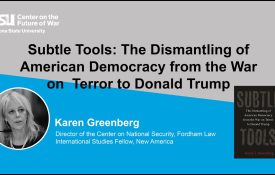
Karen Greenberg is Director of the Center on National Security at Fordham University in New York City. Her book, “Subtle Tools,” is a study of the confusion and secrecy that operated during the George W. Bush Presidency to weaken our rule of law and constitutional protections in the aftermath of 9/11. These reactive measures further paved the way for the erosion of American democratic institutions, promotion of political violence and exclusionary rhetoric, whose origins can be traced to the Tea Party (circa 2009), a populist movement that emerged within the Republican Party. The Tea Party’s confrontational tactics have since evolved into a malignant form in today’s MAGA Republican politics led by the U.S. president, who I will refer to as “45,” despite his re-election in 2024. (In observance of the 14th Amendment, Section 3 and the 2023 Colorado Supreme Court ruling, I believe the winner in 2024 is, in fact, legally disqualified from holding the office of the presidency due to his incitement of the Capitol insurrection on January 6, 2021.)
Interviewed by the Kyiv Independent, investigative journalist Craig Unger summarizes his extensive research into “45” and his connections to Russia beginning in the 1980s. In this Globus Books interview with writers Zarina Zabrisky and Greg Olear, Unger offers more details about that relationship covered his book, “American Kompromat.” “Trump/Russia,” an ABC documentary hosted by investigative reporter Sarah Ferguson, covers the Christopher Steele dossier and offers us insight into why Unger and others continue to see “45” as not only a criminal, but also a counter-intelligence risk.
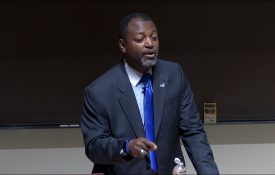
U.S. intelligence analyst Malcom Nance, whose ancestors have served in the military since the Civil War, has followed the rise of right-wing extremist movements across the globe. In this presentation sponsored by the University of Southern California, he explains America’s challenge as embodied in the Mueller Report of 2019, and the “no collusion” presidency of “45.”
The authoritarian mindset is stirred.
Preoccupied with defeating the external enemy of al-Qaeda, most of us were unaware that the events of 9/11 helped to activate the authoritarian mindset, latent but long-existing here at home.
Historian and author Heather Cox Richardson explains in fascinating detail the history of the Republican Party. She characterizes the “party of Lincoln” as historically conflicted between its ideal of equal opportunity for all and its inclination to protect the interests of the wealthy. She describes how racial prejudice later operated and shifted among both the Democratic and Republican parties, and how the ideals of President Lincoln’s venerated GOP an its anti-slavery inception have been tainted by the forces of racism, antisemitism, and moneyed interests.
In this interview, Harvard sociologist Theda Skocpal details how the right-wing, ascending in America over decades, gained momentum in the last twenty years. According to Skocpal, the emergence of the MAGA (Make America Great Again) movement was a “top down, bottom up” phenomenon, where the immense wealth of approximately 400 millionaire and billionaire families gradually allied with grass roots groups like the Tea Party, gun people, hard right Christian networks and white male supremacists, whose members oppose progressive cultural policies. This convergence opened the way for a unifying figure like “45” who would lure both factions together under one MAGA umbrella with policies such as tax cuts, and by espousing “ethno-nationalist hatred, resentment and fear of social changes in the United States in a much more distilled and media ready way.”
Lifelong Republican Kris Krebs, who served as Director of the Cybersecurity and Infrastructure Security Agency, is adamant that election 2020 was the most secure presidential election in U.S. history. Flash forward to today, where the “no collusion 45,” found guilty of sexual abuse, defamation, 34 felony counts of business fraud, notwithstanding criminal charges for election subversion and mishandling classified documents, has once again risen to the presidency on an authoritarian wave, both foreign and domestic. A party to 4000+ lawsuits to date in his career, he nonetheless consumed the Grand Old Party as it capitulated to its far-right anti-democratic wing, and the Hitlerian style “big lie” that the 2020 presidential election was stolen by the Democrats.
“The entire Republican Party, and sets of organized elite groups,” says Skocpal, “believe they can ride this tiger to the goals they want, without the tiger consuming them.”
Historical patterns do repeat.
In terms of world history, it’s nearly impossible for average untrained citizens like us, raised in an ethical democratic framework, to fully grasp the depth of depravity, the enormity of suffering, that the authoritarian mindset has inflicted upon the world.
Dedicated scholars, philosophers, writers and analysts continue to explore the dark corners of that mindset in various societies, including our own. Historian and expert Ruth Ben-Ghiat, in her book, “Strongmen: Mussolini to the Present,” synthesizes the common historical threads of right-wing authoritarian expression to help us attain at least a basic understanding of what is afoot in America today, to avoid entering the undertow of the demonstrably untrue.
As Ghiat explains, the modern right-wing authoritarian uses conservative elites as a stairway to “legitimacy.” Once he ascends to power through democratic means, he will then maneuver to erase the checks on executive power. In short: he will use the levers of democracy to tear the democracy down, to secure his hold on that power.
We see this facsimile today, as elected Republicans with few exceptions publicly support or minimize the election lies, or remain silent, while their colleagues undermine our institutions, violate norms of decency and ignore the rule of law. In their book “Tyranny of the Minority,” political scientists Steven Livitsky and Daniel Ziblatt use the term “semi-loyalists” to describe this pattern of behavior deemed indispensable to the authoritarian effort to deconstruct democracy. Furthermore, those “indispensables” rely on figures like “Marjorie Taylor Greens” and groups like the “Proud Boys” to openly promote propaganda and violence, allowing semi-loyalists to maintain a facade of respectability.
Repeating techniques:
The fascists and right-wing authoritarians of the past, and the current day, employ deliberate techniques to seize power in a democracy and then unravel its democratic structure to retain power. Professors Ruth Ben-Ghiat and Jason Stanley have identified some of their common features and “tools of rule“:
The leaders have a history of criminal behavior. In expressions of grandiosity, they promote a mythic past that never existed. Most thrive on male dominance, fostering an “ethos of macho lawlessness” that moves them to commit crimes while unconcerned with consequences. They show a deep lack of empathy and secretly distain the followers who make sacrifices to fuel their ascendancy. Once risen to power, the leaders will do anything to maintain their power.
Their movements spread false narratives to portray the political opposition as “the internal enemy,” fomenting anger into division, and often into violence. The movement uses the disguise of projection to accuse the opposition of the very things that the movement itself is doing. It’s supported by corporations, often whose products (e.g. dirty fuels) do not support the public good, but rather prioritize power above democracy. Another common feature is that government officials on the center-right fall in line to find common cause with the far-right extremists and the corporate interests supporting them. An extremist minority stokes ethnic, racial and religious fears in order to weaken the protective bonds among the majority and gain oppressive power over it. This is how freedom is turned on its head.
In America, various groups and their varied agendas have coalesced to form “45’s” movement. Some have social, political and religious motivations, some trace back to the Confederacy).
When chaos ensues, the authoritarian leader rises.
The authoritarian mind is a conduit for toxic power, as a steady irritant delivered to the hairline fractures of a society. Bit by gradual bit, negative power chips away at evidence-based truth. It delivers oxygen to grievance, exports responsibility to perceived enemies, and sends the fire of hatred on its mission to attack and divide. Divisions harden until opposition itself becomes the very core of an extremist movement’s identity, and the leader is exalted in the chaos created.
As I update this essay, the administration is attacking and threatening members of the North Atlantic Treaty Organization (NATO), American universities, law firms, members of the judiciary and others who the President perceives as his political enemies. Masked Immigration and Customs Enforcement (ICE) agents are engaged in a mass deportation effort, often conducting indiscriminate and violent raids and arrests of immigrants, including some with legal status. As most of us know, ICE has murdered two innocent American citizens.
Pete Hegseth, the Secretary of Defense, strangely renamed Secretary of War, recently told a highly unusual gathering of hundreds of U.S. military officials who were summoned by the President to Quantico, Virginia, that they must either follow his orders or leave the military.
The 150-year-old Posse Comitatus Act limits the U.S. military’s role in enforcing domestic laws, unless “expressly” authorized by the Constitution or Congress. Despite the law, the President is sending Federal troops and the National Guard to Democratic-led cities in response to protests and to protect ICE agents. Over the objections of local and state officials, “45” threatens to use the centuries-old Insurrection Act to circumvent court rulings that block the dispatch of those troops. Legal actions have been launched against the President’s Federal law enforcement interventions, and the states are divided along party lines concerning presidential vs state authority to police its own citizens.
The machinery of dehumanization begins with lies, and scapegoats.
Historians and social scientists debate terms like authoritarian, nationalist, far right populist, and kleptocrat to describe “45.” The word “fascism” is often avoided, since it fits precisely only two regimes in history: Benito Mussolini’s Italy and Adolf Hitler’s Germany. (Click here for an in-depth examination of the term fascism.) While “45” does not seem to fit neatly into one historical mold, most experts point to alarming resonances with the authoritarian mindset, as he tramples norms and exploits racism, sexism, and antisemitism, indulging the passions of misdirected blame. The collapse of Weimar Germany is the most familiar and glaring example of the worst consequences of extremism known to history. For that reason, to examine some of its features seems useful as a wake-up warning about maneuvers which resemble how its democracy broke down.
As we know well–or should, Adolf Hitler and his deluded Nazi thugs exploited fear and heaped manufactured blame upon the Jewish people, and others, as punishment for Germany’s humiliation after WWI and in so doing, unleashed the most iniquitous slaughter in all of human history. During the Nazis’ rise to savage power, much of the electorate misinterpreted what was taking place. Conservatives told themselves that once in power, the high office would restrain Hitler, keeping him and his thugs under control. In just three months after taking office, Hitler eliminated democracy and established his dictatorship in the Weimar Republic of Germany.
What happened in America on January 6, 2021, is not an exact replica of other movements, but it echoes the right-wing authoritarian playbook in the sense that fear, righteousness and division were exploited to the boiling point. It’s well documented that “45” gave an incendiary speech that fueled the forced entry into the Capitol building intended to keep “45” in power by stopping the certification of the 2020 election. The President did nothing for eight hours to stop the crowd, resulting in many people injured, including 174 police officers, four of whom later died by suicide, and $2.7 million in damages. He and his administration later excused the violence as patriotism, some calling it “tourism.” Senior military leaders feared that an attempted coup was coming. Their fears were justified when “45” fired the military civilian leadership who stood in his way, then replaced them with his loyalists.
How does tyranny succeed in causing unspeakable crimes against humanity?
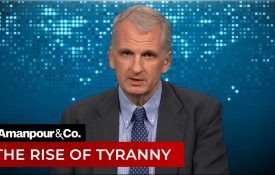
In this fascinating discussion about the Nazi period, historian and Professor Timothy Snyder illustrates how savagery against Jews (and many others) in the 1930s and 1940s was unleashed when political order broker down, institutions were destroyed and lawlessness ensued. The history of WWII, he says, reveals no consistent ideology to alone explain the direct cause of the genocide that took place against the Jewish people: “If you’re going to look for a reason why the holocaust happens, where it happens, you have to have something else. And that something else is the destruction of institutions.” His observations bring home, in stark relief, that the preservation of institutions is the critical factor in the ultimate safety of each and every one of us.
The process of weakening has taken more time in the long-stable democracy of the United States.
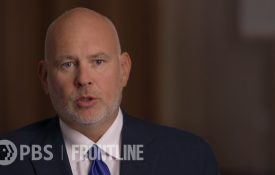
Longtime Republican strategist, Steve Schmidt, shares his penetrating on-the-ground observations (in 2020) about the cultural and political forces that ushered extremism into the Republican Party over the decades, including lack of accountability by both parties for the Iraq War and the 2008 financial crisis.
Steven Livitsky and Daniel Ziblatt point to unresolved and growing racial anxieties together with antiquated structures like the electoral college, Senate filibuster, and unlimited tenure of Supreme Court Justices to explain how Republicans, no longer incentivized to win majorities, resorted to winning power through minorities. The Supreme Court’s decision to overturn Roe v. Wade, as against the will of an American majority, some 70%, is a prime example.
Senator Byrd would certainly be aghast at the expanded role of money in politics today. As Heather Cox Richardson explains in Letters from an American 6/8/2024, “Economists estimate that between 1981 and 2021, more than $50 trillion dollars moved from the bottom 90% of Americans to the top 1%.” This is thanks in part to increasing influence over government by corporations who fight meaningful regulation and paying a fair share of taxes, callously placing profits over the values of democracy, its people, and the environment. Our election process now favors the interests of billionaires over the public interest, thanks to the Supreme Court’s Citizens United decision in 2010. The problem is compounded by the manipulation of legacy and online media to circulate propaganda about what, and whom, to fear. Distorted narratives flood the media zones to blame “inflation, the border, the liberals, the socialists, the immigrants!” while the genuine causes of harm to suffering American families go unspoken and unaddressed.
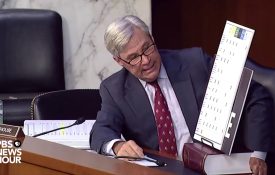
Senator Sheldon Whitehouse shares findings from his extensive research into Supreme Court appointments being funded by dark money, the opaque nature of which is slowly coming to light. Authors Charles G. Davidson and Ben Judah expose a vast “financial-secrecy system” enabled by lax laws and low transparency that weaken the power of the West to fend off authoritarianism. They call urgently for reform, to foster positive realignment between capitalism and democracy.
The FBI resisted the political pressures to pledge loyalty to “45” above its oath to the Constitution.
It’s also worth emphasizing that after September 11, 2001, a single government agency, the FBI, refused to sanction skewed intelligence used to legitimize the Iraq invasion, as well as rejected torture of detainees. For many citizens, myself included, the FBI’s professionalism and adherence to the rule of law during the Iraq war years was a doorway to hope and renewed trust in the government. The Bureau’s legacy includes, of course, its share of past mistakes and controversies. But following the 1970s Church Committee reforms, the FBI on balance has acted overwhelmingly in defense of national security, faithful to the American people and the rule of law, as former FBI agent Ali Soufan’s career exemplifies. Soufan was born in Lebanon, where, as a child, his lived experience of a society unraveling informed his love of American freedom and dedication to the Bureau. It’s striking that the MAGA camp has kept its promise to kneecap the FBI and the Justice Department by purging officials who worked on the just prosecution of January 6 rioters.
“Project 2025” disempowers the Bureau, precisely for those reasons.
As most Americans know by now, “Project 2025” is a 920-page, $22M plan sponsored by the Heritage Foundation. What citizens might not realize is that 25 of its 30 chapters were written by officials of “45’s” former administration with input from over 100 of them. The plan is a detailed blueprint for concentrating power in the executive branch, for governing on the basis of loyalty pledge to the president, not oath to the Constitution and the public interest. With such loyalists, the regime is replacing tens of thousands of federal merit-based civil servants, including at the Department of Justice.
The plan seeks to attack our Medicare, Social Security, and to overpower our government agencies. It threatens the foundations of our Constitution: the separation of powers, the separation of church and state, and civil liberties. Largely rejected as anti-constitutional by both liberal and conservative legal experts, and by the public, “45” “upped” his claim to know nothing about Project 2025, despite that his former appointees wrote so much of the document which features his name specifically, hundreds of times. Since his re-election, “Project 2025” has been marching forward, full speed ahead.
Project 2025, together with the July 1, 2024 immunity ruling granted by the hard right Supreme Court, equals “45’s” pathway to unlimited power and unaccountability. The plan is now being received with aversion by increasing numbers of the American people, as it becomes painfully clear that “45” seeks to enact every unthinkable threat of retribution he has uttered toward his political “enemies,” including the conservative legal experts who hold him accountable to the rule of law.
The injustice of “45’s” border policy should remind us that the awesome power of the presidency has access to the “War on Terror” policy extremes, which endure as retrievable. Section 1021 of the AUMF, for example, does not exclude American citizens from indefinite detention. Since its adoption during the George W. Bush era, it was never amended.
The Supreme Court’s ruling of July 1, 2024 grants absolute immunity to the president for criminal acts committed while in office, if such acts are defined as “official duties.” Deemed anti-constitutional by leading liberal and conservative legal experts, as well as the high court’s own liberal judges, “45’s” past and potential future crimes, or those of any future president, are effectively erased. It’s easy to imagine this alarming path to unchecked power leaves President John F. Kennedy, Senator Robert Byrd, and especially the Founding Fathers, turning in their graves.
PART III: SEDUCTION
Vulnerability to extremism begins with the individual.
Among the supporters of “45” are many struggling families, whose growing frustration has led them to invest hope in a “pathological liar,” in the words of Bernie Sanders, unaware that doing so puts their democracy, and therefore themselves, at much greater risk. (The Sanders interview took place before President Biden stepped down from election 2024.)
I do not mean to suggest that all MAGA supporters are sexist, racist, antisemitic or extremist. Certainly they are not. A large number of voters might be described as on-the-fence, confused by conflicting narratives, believing unreliable spin, or simply left with little time to dig for information. It’s very possible to keep voting for the same Party, not recognizing its capture by antidemocratic forces.
However, many other supporters of MAGA have become radicalized, and a frightening number of Americans are now conditioned to believe that their patriotic duty might require them to commit illegal acts and violence in order to “save” the country. Since 2001, government and independent sources claim that right-wing extremist violence has been responsible for 75% to 80% of U.S. domestic terrorism deaths since 2001. In contrast, left-wing extremist incidents have amounted go 10% to 15% of incidents and less than 5% of fatalities.
Philosopher Eric Hoffer, in his 1951 book “True Believer,” posits that often a follower who joins an extremist movement has done so to relieve suffering: to escape pain through an intoxicating exit. Whether from economic hardship, social uncertainty, shifting demographics, or feelings of powerlessness, personal responsibility for life’s outcomes brings trepidation about the future. Followers are led to pivot their gaze away from true causes of grievance which the authoritarian leader has no intention to solve, and toward the “glory days” of an idealized past which never existed.
Radicalization leads members to sever trust in their government, their institutions, and families. Isolation is relieved in the bonds of the group, where they find unity in erroneous cause and effect, and false enemies to blame. Once their critical thinking becomes suspended, their tether with reality loosens until they surrender their personal agency to the leader’s control. Extremism can be understood as tragedy.
Ernest Hemingway said, “The world breaks everyone. But some are strong at the broken places.”
Healthy spirituality teaches humankind to embrace, along with life’s joys, the insights gifted through the experience of our pain. In a classic love letter to life, “Man’s Search for Meaning,” Viktor Frankl imparts to us that, from mild to unimaginable anguish, there is no end point to regeneration after loss.
We are not always strong, however, at the broken places. Youth at formative stages can be at particular risk of offering to negative power a most terrible gift: the unwanted self (Hoffer’s phrase) in exchange for a “safer,” proscribed identity. Where human life in reality demands we wrestle with ambiguity, Hoffer argues, the authoritarian vision carries the deceptive allure of “certainty.”
The devastating events of September 11, 2001, showcased the extreme reach of negative power in history’s most horrifying act of terrorism. Among the most ruthless members of al-Qaeda, there were undoubtedly young, impressionable individuals grappling with economic insecurity, social frustrations, or a loss of identity in a rapidly changing world. Innocence and malice alike can be manipulated to relinquish personal agency, leading to the harm or killing of innocents under the guise of patriotic fervor to “save humankind” or for “the glory of God.” This highlights the danger of religiosity when corrupted to justify brutality as divinely inspired, when in reality, it serves the brazen political aims of “the leader” and his enablers.
The religious right paints a broad brush.
A primary network of power and money abetting “45” is composed of disparate groups of hundreds of thousands, coalescing under a wide umbrella referred to as White Christian Nationalism. Many of the rioters aiming to overturn the freest and fairest election in U.S. history on 1/6 operated under its banner, and as we’ve learned, coordinated in advance their march on the Capitol.
The radical elements of these diverse groups find unity in an old antebellum Pre-Civil War strain of belief that American freedoms are reserved for those who are white, Christian, native born, and male. New and disturbing to most Christians is the embrace of this belief by members of a major political party, some who openly peddle, excuse or cloak racial and religious prejudice, misogyny, and repression of LGBT people for political advantage. Hard core Christian Nationalists seek to establish an explicitly Christian government in opposition to the Constitution, and in opposition to the majority of Americans who value the guarantee of religious freedom for themselves, and for others. Deception and force are not Christian values that foster love, beauty and a more peaceful world. In reality they are tactics used as tools of rule. MAGA is a political movement that uses, in part, the distortion of religion as an avenue to power. Sadly ironic is the hard core’s fervor for dismantling the separation of church and state: the very guarantor of its own religious protection.
January 6 occurred in the twentieth year since the first hijackers arrived in the United States.
After the attacks on 9/11, moderate Muslim leaders were beseeching the world community to understand that al-Qaeda had co-opted the word “jihad,” and reversed its true meaning. Jihad, they said, is to be understood as a spiritual challenge to be reckoned with on the private inner level of the human spirit, not as a call for war on the outer level of life.
While in features, magnitude and motivation the two attacks were vastly different, we cannot deny that the thematic core producing January 6 was, in part, an echo of September 11: Religious extremism aligned with political ideology incited into violence by a leader and his opportunistic enablers, who manipulate discontent to amass political power, disguised as religious conviction. Violent Islamic terrorism, and the over-reaction to it, served to invigorate far right groups here at home. The violent insurrection at the capitol was a perverted ballet, choreographed by cynical disregard for the truth and “rigged election” propaganda.
Owing to our blurred vision, it is as though terrorism has turned inward. In his ocean grave, Osama bin-Laden could be excused for counting January 6, in a rudimentary way, his win.
The Republican Party:
Both political parties have enabled a Faustian bargain with the hardships of inequality. For decades in America, reforms have come and gone, in a trajectory that has favored the undoing of checks on executive power, the pollution of dark money in our system, rollbacks of stabilizing regulations, and an ever-widening wealth gap. Both sides of the aisle share responsibility for the erosion of accountability that has led to a constitutional crisis. However, the Republican Party stands out in this regard. The peaceful transfer of power was violated by one party: the Republican Party.
Many of our parents and friends were respectable members of the GOP.
Since the 1970s, the Republican Party has aligned itself with influential politicized religious groups and other sources of support, a trend amplified by Citizens United. From the start of the 21st Century until 2024, the GOP had managed to win the popular vote for president only once, narrowly in 2004. In reaction to that fragile position, the party gradually pivoted away from principles like electoral integrity, decency and oath, instead embracing strategies for minority rule. Its capitulation to “45” stands as clear evidence of its deviation away from democratic norms. Meanwhile, billions of dollars fuel the Christian Nationalist agenda, which, under the guise of religious justification, condones even the use of physical violence, as semi-loyalist conservatives remain silent, distort the truth, or tell lies outright.
PART IV: HOPE
Progress shown by factual results:
Rational and honest actors embracing reality in America have no doubt, as tested in 64 lawsuits, that Joe Biden won a free and fair election in 2020, despite the false claims that continue to circulate.
During the Biden years, it is also reality that bipartisan legislative progress was made against a steady tide of anti-democratic maneuvers, unlike any since the Civil War. The Biden administration in just two years passed the American Rescue Plan Act 2021, Inflation Reduction Act of 2022, the Chips and Science Act, Pact Act, and the bipartisan Infrastructure Investment and Jobs Act. They rejoined the Paris Climate Agreement, recommitted to the World Health Organization, made improvements in mental health, school security, and even made limited progress on the intransigent issues of gun control and immigration, despite the bipartisan border agreement that “45” deliberately undermined it for his political benefit.
Democratic voices and urgent warnings:
Despite the mainstream media’s emphasis on generating conflict and criticism for profit, important independent voices in defense of our constitutional rights are refusing to back down.
There was a strong outcry by legal experts in 2024 when, a few days before our celebration of independence on July 4th, the far-right judges on the Supreme Court awarded near total immunity befitting a king to a convicted felon. The same the man who attempted to overturn the genuine results of the 2020 presidential election by spreading the “stolen election” lie that he began to circulate long before the election took place.
President Biden rejected the ruling emphatically, characterizing it as the antithesis of our founding principle that all people are equal under the law, including the most powerful people. Never before in American history has the presidency been made “unconstrained by the fear of prosecution,” in the words of Heather Cox Richardson, who shared historical perspectives and her dire warning about the immunity ruling and its fallout.
Lawrence Tribe, a prominent legal voice against that ruling, offers us insight into the legal maneuvers used in the hostile takeover of the government during the first year of “45’s” second term. “Every agency, every department is now simply one of the octopus arms of the ogre in the White House. If this is not a five alarm fire, where we must all rise up and do what we can to defend out basic system of government, I don’t know what would be.”
Attorney Marc Elias presided over the 64 state cases filed by “45” to contest the 2020 presidential election results. Elias won 63 and lost only one minor case, later overturned in his favor. He’s still fighting to expose election rigging and fraud. On his program, Democracy Docket, he prepares us by sounding the alarm about a concerted effort by “45” to steal the 2026 midterms election through redistricting, voter suppression, and finally, election subversion by falsely claiming a “national emergency.”
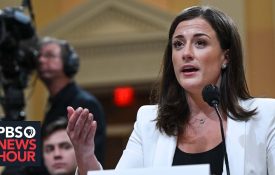
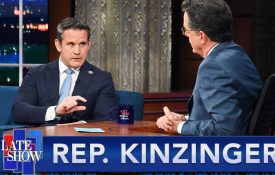
Former Wyoming Congresswoman Elizabeth Cheney, known as a deeply conservative Republican, became a staunch critic of “45” and served as Vice Chair of the U.S. House Select Committee on the January 6 attack. She continued to speak out in the lead up to the 2024 election. The other Republican who joined the Committee, former Illinois Congressman Adam Kinzinger, is still speaking out in support of democratic principles. Both officials were willing to pay a political price for keeping their oaths to the Constitution.
Critically, experts and scholars such as Heather Cox Richardson teach us that the fate of our republic is not a foregone conclusion historically assigned to the rising chaos. We are in trouble, yes, and it runs deep.
But they remind us, it’s not too late to save our democracy.
For an analogous “America First” period when authoritarianism gained traction in our country during the 1930s, listen to this utterly fascinating story about the power of the people, like you and me, in Rachel Maddow’s brilliant podcast series, “ULTRA.”
Cultural voices in resistance today:
While religion-infused politics is breeding extremes, those extremes and their contradictions are being made visible to more people, thanks to responsible voices.
“45” has made desperate claims that he is owed the Nobel Peace Prize, yet he made threats when not chosen. He formed the “Board of Peace,” yet it operates outside the United Nations and international law. He harshly condemned wars of regime change in his campaigns for president, yet with Israel he has launched a major regime change war against Iran. We watch the launch of “Operation Epic Fury” unfold with no justification under international law, and no consultation with the U.S. Congress or the American people, yet the invasion of Iran is in our name. Troops report that commanders are saying the invasion is part of God’s divine plan. In that message, a distinct echo of religion perverted for violence resonates, in the context of September 11. Professor Jason Stanley explains the tactics used in the politics of supremacy, and historian Ruth Ben Ghiat describes the parallels of the current U.S. administration with the expansionism of fascist regimes, and the importance of insisting on our Constitutional rights.
More scholars, policymakers and more Christian organizations are claiming openly that Christian Nationalism is a threat to both democracy and to the core teachings of the Christian religion.
In that effort, irony and analogy are seeking our attention. Here James Talarico, Texas State Representative and aspiring preacher, exposes the pretense of Christian Nationalism while seeking to restore understanding in the language of unity, universality, and fidelity to the separation of church and state. His inspiring words and authenticity demonstrate the kind of power that inspires faith and solidarity in one another. He offers an expanded view of his work and thought in this interview with Joe Rogan.
Comedian John Fugelsang is helping to lighten the way to fact-based teachings in the Bible. He was raised by devout Christian activists, and he makes sharp distinctions between the values at the heart of the actual words of Christ from cultural preferences that falsely claim to be Christian.
Another brave challenger ahead of his time, long alert to the dangers of power-driven religion in politics, was the late American Bishop John Shelby Spong. In this interview years ago, Spong expresses hope in America’s rebounding after the extremes of the George W. Bush presidency. He advocates evolution of the Christian faith, while sharing prescient observations about the growing dangers of hardened “certainty” in religions.
Professor Lawrence Tribe describes in this interview what has called him to both the arts, and to legal justice. “Sometimes I describe it as a sort of double helix… one strand deals with the aesthetics of the universe, its beauty, the order of things… the other strand is about morality, justice, the political universe, the social realities.” He cites Emma Lazarus, “Give me your tired, your poor, your huddled masses yearning to breathe free. I lift my lamp beside the golden door.”
Sometimes art says it best.
In the film, “The Verdict,” Sidney Lumet’s 1982 legal drama, prosecuting attorney Frank Galvin (Paul Newman) pivots from comfortable avoidance to face a hard truth, thereby leaving his legal case helplessly arrayed against powerfully corrupt officials in the community.
As a despairing Galvin faces the uphill quest, his expert witness exhorts him to invest hope in the jury, saying, “People can surprise you. Sometimes they have a great capacity to hear the truth.”
Perhaps more brave Americans will pivot from comfortable avoidance for the sake of an informed public. Perhaps they will speak truth into the spaces of omission, where “the dangers of unwarranted concealment of pertinent facts, far outweigh the dangers to justify it.” At this late hour, who will enter our children’s future history books to call the light from behind their eyes, as they learn what fruits of sacrifice were bequeathed them?
We cannot remove the reflection of al-Qaeda in the mirror of January 6.
But you and I still have agency to face that challenging reflection, to embrace the experience of our pain as gifts of learning that lie dormant within ourselves and our society. We are imperfect works of art in the making. But we can begin to heal the darkness of supremacy, domination and cruelty with the small lights of kindness, dignity and understanding.
As Astrophysicist Neil deGrasse Tyson recently advised, beware the one who believes they have access to “the unassailable truth that others do not.” As wisdom demands, he warns, we must never underestimate the intelligence at work in the very strangeness of life’s design. Christ said of the mystery in John 14:2, “In my Father’s house are many mansions…” At the transcendent center with no circumference, within and beyond the mystery of human time, lies the only mythic past unerringly true.
The past may hold wisdom, but utopian dreams are traitors to it. “The door is round, and open,” says Rumi, the 13th Century Persian poet, “Don’t go back to sleep.”
If one bold speech alone could dismantle the negative power now seeking to destroy our democracy, it might possibly be this one, Bishop Spong’s last public lecture, pointing to something universal, existing both deeply within and beyond religions. (after page loads, click again if needed.)
Russian author and Soviet dissident Aleksandr Solzhenitsyn wrote, “The line between good and evil runs not through states, nor between classes, nor between political parties either — but right through every human heart.”
In 1826, shortly before July 4th, Thomas Jefferson wrote his last public letter in which he described himself as one of the surviving signers of a Declaration pregnant with our own fate, and the fate of the world. “Let the annual return of this day,” he said, “forever refresh our recollections of these rights, and an undiminished devotion to them.”
To esteemed guardians and ancestors: rest in peace. Lincoln’s “better angels,” though at times seeming few, are still at work, informed by faith while not driven to oppress by dogmas. Humility, integrity and honest debate still stir in the hearts of true leaders in your America still free: remind us to join them.
NEVER FORGET
“Never Forget,” is foremost a cry of remembrance for the loved ones lost on September 11.
Let it also recall the Declaration: that endowed by the ineffable creator, and by no person, lies our freedom… to unmask the broken places in ourselves and our fellows, to understand and heed the truthful answers to the “whys” of our discontent.
© 2025 Barbara Bowen, All Rights Reserved